

News Details
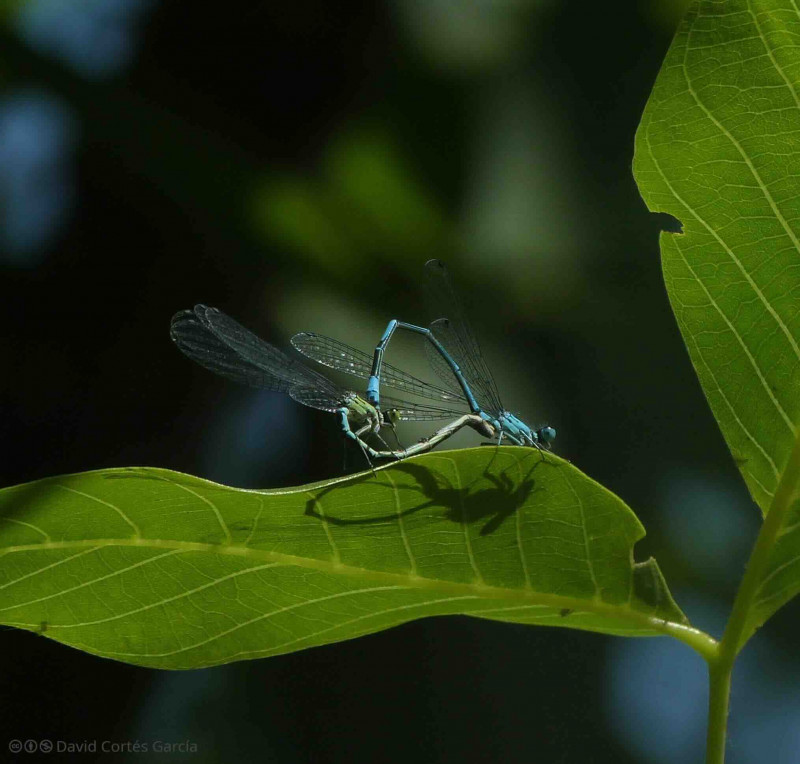
This chapter, part of Towards a Biosemiotic Theoretical Biology (MIT Press, 2026), challenges the dominant gene-focused view of reproduction within evolutionary biology, which tends to reduce it to genetic transmission. Drawing on the legacy of organicism—from early twentieth-century embryology and the Theoretical Biology Group to the autopoiesis theory and organizational accounts—the authors trace an alternative tradition that understands reproduction as the continuous construction and re-instantiation of biological organization, not just as the means for heredity.
Building on these insights, they propose the framework for an expanded reproduction: a relational, collective, and distributed process operating at both intraorganismal and interorganismal scales, encompassing both conflictual as well as collaborative dynamics (exemplified by paradigmatic cases such as pregnancy, symbiotic reproduction, or cooperative breeding). The chapter closes by introducing the reproductive Umwelt, extending von Uexküll's biosemiotic framework to address how perception, meaning, and ecological embedding are shaped by the engagement of organisms in reproductive processes beyond mere survival.
Publication:
Etxeberria A, Cortés-García D (2026) Toward Expanded Reproduction: An Intraorganismal and Interorganismal Relational Account. In: Kull K & Favareau D (eds) Towards a Biosemiotic Theoretical Biology: Sign Processes and Meaning-Making in Living Systems. MIT Press.