

News Details
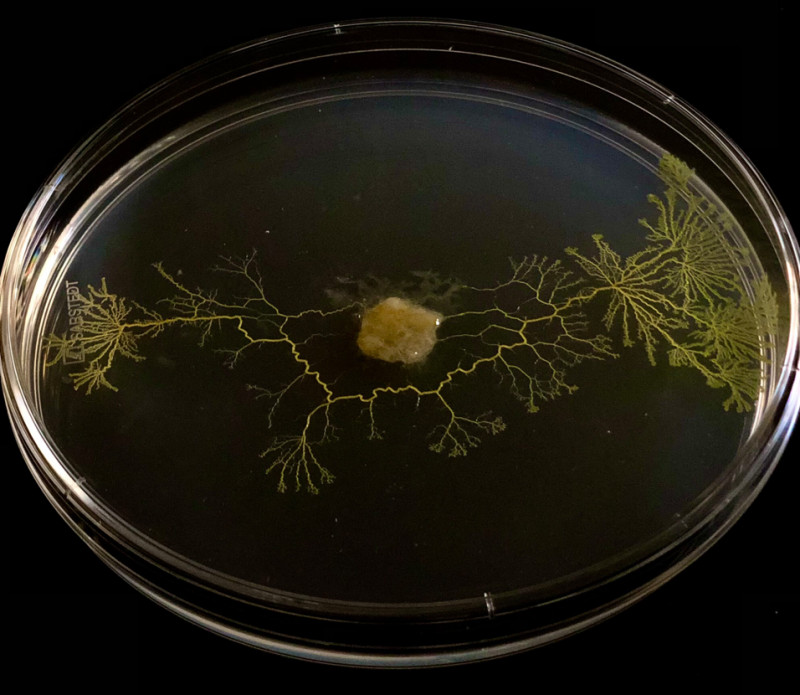
Decision-making is a central function of adaptive behaviour in biological agents. However, strategies for adaptive decision-making can vary substantially across species.
In a recent paper published in Biological Reviews, KLI fellow Liberty Severs, along with Qiuran Wang, introduces a framework for characterising decision-making as a form of history-dependent regulation to better account for its distributed, decentralised, and non-representational forms. The examples the authors consider span the acellular slime mould, plants, flocking behaviour in starlings, and more, with an emphasis on the role of regulatory control and organisation in structuring adaptive behaviour across different scales of analysis. The newly developed framework, the “Continual Decision Making Dynamics (CDMD) framework,” shall help compare decision strategies across radically different organisms and move discussions beyond the traditional focus on discrete choice and neural representation.
Publication: Severs, L. and Wang, Q. (2026), Continual decision-making dynamics across biological organisms. Biol Rev. https://doi.org/10.1002/brv.70115